
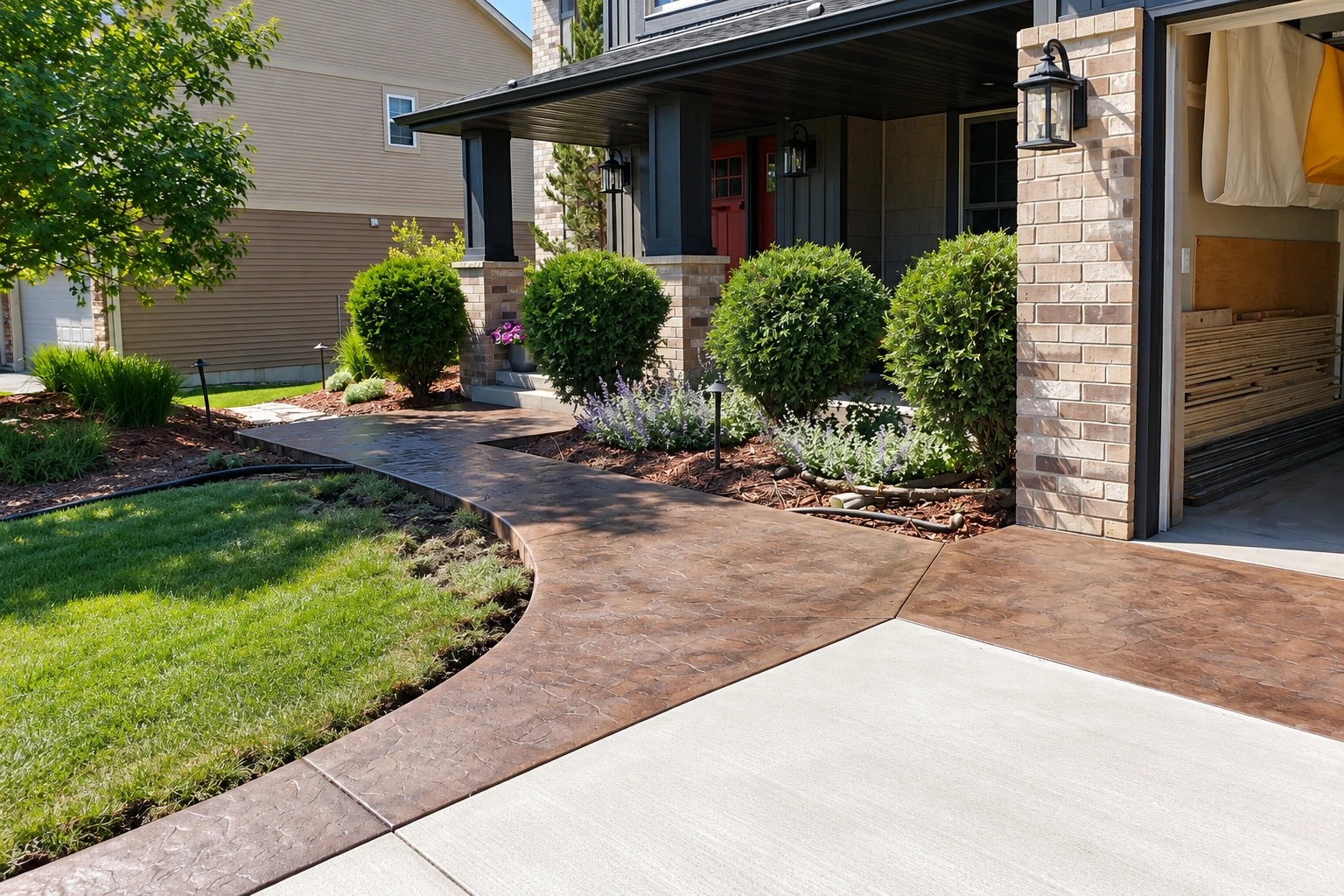
Garage floor concrete in Alexandria VA - a solid floor that starts with the base
Cracked, sinking or flaking garage floor? We look at what's under it first, then resurface it or pour a new slab on a packed base.
Have us look at your garage floor
We're based in Alexandria and work across the cities around it in Northern Virginia and nearby Maryland, so if yours isn't listed, call (571) 760-4255 and ask.
Do you need a new garage floor or just a new surface?
Garage floor concrete in Alexandria, VA means either resurfacing a worn slab or tearing out the old floor, hauling it away and pouring a new one, and which one you need depends on how badly the floor is damaged.
Most calls start with a crack that keeps growing, a corner that's sinking or a top layer that flakes off where the car sits. The price moves with the size of the garage, whether the old slab has to come out, how thick the new one needs to be and whether it gets steel inside, and the schedule turns on the curing wait and the time of year, since a slab poured late in fall heads into salt season young. Under Virginia's contractor law, a single job over $1,000 and under $30,000 falls in the Class C license tier, so ask any bidder for their state license number before you sign. Your written estimate spells out what's included, removal and haul-away among them, so you can line it up fairly against other bids.
Why Alexandria homeowners call J&K Alexandria Concrete Company for garage floors
I check what's under it first
I come out to every estimate myself, because the city's geologic map shows clay that swells and shrinks under parts of Alexandria. What the old slab sits on decides whether a new surface will last.
Started in 2017 after framing houses
I framed houses for years before switching to concrete, and I started this business in 2017. I got tired of building on slabs that weren't done right, so the base gets my attention first.
Licensed, insured and on the permit
We're licensed and fully insured. In Alexandria the contractor's state license number goes on the permit submission, so the person responsible for your floor is on record with the city.
On a garage floor, what counts most is the part you won't see once the car's back inside. Send us a few details about your garage and I'll come out and take a look.
How we handle garage floor concrete
I look at the damage before anything else, because some floors only need a new surface and there's no point tearing out a slab that's still sound. When it does need replacing, we break up the old floor and haul it off, then dig out and pack the subgrade, the soil and stone the slab sits on, so the new floor doesn't settle the way loose dirt does. We form, pour and finish the slab, and on hot days we try to pour early, since a top that dries too fast in midday heat turns weak and dusty later. Then it cures, which is the stretch where the concrete hardens and gains strength while you keep weight off it. We also help you pick a pour month that gives the new slab a fair start before road salt rides in on your car. If the budget gets tight, I'd rather you skip a fancy finish than skimp on the base, because a finish can be redone and a bad base can't be fixed without starting over.
Some garage jobs tie into other work. If you'd like color, stain or a pattern instead of plain gray, that's decorative concrete, and it's worth deciding before the pour rather than after. If your garage is cut into a slope, concrete retaining walls beside the garage or driveway may belong in the same plan.
Resurfacing a sound floor
Suits a slab with minor cracks or a worn, flaky top that's still solid underneath. It costs less and keeps you out of the garage for less time than a new pour.
Full tear-out and new pour
For floors that are sinking, broken through or failing at the base. The old slab comes out and a new one goes in, so the problem underneath gets fixed instead of covered up.
Reinforced with rebar
Rebar, the steel bars set inside the slab, helps hold the concrete together if it cracks. It suits floors that carry heavy vehicles or sit on ground that tends to move.
Broom or smooth finish
A broom finish, a light brushed texture, gives your shoes some grip when snowmelt drips off the car. A smooth troweled finish sweeps easier and suits a floor you plan to coat or stain.
How can you tell your garage floor needs work?
Cracks that keep growing
A crack that gets longer or wider each year usually means the slab is moving with the ground under it. Waiting lets salt and dirt work in and the pieces drift further apart.
A sunken or tilted section
One section sitting lower than the rest, or a corner that rocks under a tire, usually means the base settled. The longer it sinks, the less likely a new surface will fix it.
Flaking near the tire tracks
Thin flakes peeling off the top where the car sits are called scaling. Caught early, it may only need a new surface, but left alone it eats deeper each winter.
Dust and pitting on top
A floor that leaves grit on the broom however often you sweep usually has a weak top layer. Left alone, it wears into pits that catch salt and chip further every year.
What happens after you call about your garage floor?
Call and have me look
I come out to look at the floor and ask a lot of questions about what's there and how you use it. You get a written estimate spelling out what's included.
Sort permits, then pour
We sort out which office covers your address and what paperwork the job needs before we set a pour date. Then our crew tears out, preps the base, pours and finishes.
Walk the finished floor together
I walk the finished job with you at the end. We go over when you can walk on it and when the car can come back, since the slab keeps curing.
Garage floor questions we hear
These are the questions Alexandria homeowners ask most about garage floors. If yours isn't here, or your floor doesn't look like any of these, call and I'll come take a look.
Should I resurface or replace my garage floor?
Resurface if the damage is minor cracks or a worn top on a slab that's still solid, and replace it if the floor is badly broken or the trouble goes down into the foundation. The floor's condition sets the size of the job, so the best place to start is describing what you see or sending photos of the cracks.
How much does a new garage floor cost in Northern Virginia?
A new concrete slab in Northern Virginia, not counting staining or stamping, usually costs about $6 to $12 per square foot. Reinforced slabs cost more per square foot than plain pads, and garage slabs run at the thicker end of what home floors use, so ask what thickness each quote assumes. Tearing out and hauling off the old floor is separate work, and I write down what's included in your estimate so you can compare bids fairly.
How long does garage floor replacement take, and when can I park on it?
Most full replacements take 2 to 4 days of active work, and you can usually walk on the new floor after 24 to 48 hours but should keep the car off for 7 days. The concrete keeps curing for 28 days before it reaches full strength, so plan on parking in the driveway or on the street for at least that first week.
Does Alexandria require a permit for garage concrete work?
The city requires permits for most construction and maintenance work on buildings and structures, and its residential permit category covers private garages, so check before you assume a new floor goes without one. If no contractor is doing the work, the city asks for a Property Owner's Affidavit, and you can read the city's permit requirements yourself. When we take the job, we find out which office covers your address, handle the permit work for our part and tell you up front if anything needs your signature.
What causes a new garage floor to flake and peel?
Usually salt, and a concrete group in Alberta warns that even the salt carried in on your car can cause severe scaling on a newly placed garage slab, with light salt doing more harm than heavy salt. The same group says air-entrained concrete, a mix with tiny air bubbles that give freezing water room to expand, is a must to prevent scaling. That's advice from a colder place, but it's worth asking every contractor, us included, whether the quote uses it.
What is the best time of year to pour a garage floor?
Earlier in the year beats late fall, because a new slab needs time before it meets deicing salt. A Michigan concrete group advises keeping deicers off new concrete as much as possible for its first year, and notes that a floor poured in October or November may not get 30 days of drying before deicer use starts. That's why the pour month comes up when I write your estimate.
A written estimate for your garage floor
Tell us your garage size, send photos of the cracks or damage and name the month you'd like to pour, and we'll reply within one business day. I'll come out for a free estimate at your property, with no obligation.
Garage floors and finishes
Work that often goes with it
Decorative concrete
If a plain gray floor isn't what you want, color, stain or a pattern can be planned into the new slab before the concrete goes in.
Learn moreConcrete retaining walls
When a garage is cut into a slope, a wall that holds the hillside back can protect the driveway and slab from soil pushing in over time.
Learn more